 APECS – European pilot line for advanced packaging and heterogeneous integration
Semiconductors in Europe | Between the Political Framework, Industrial Implementation, and Competitive Advantages
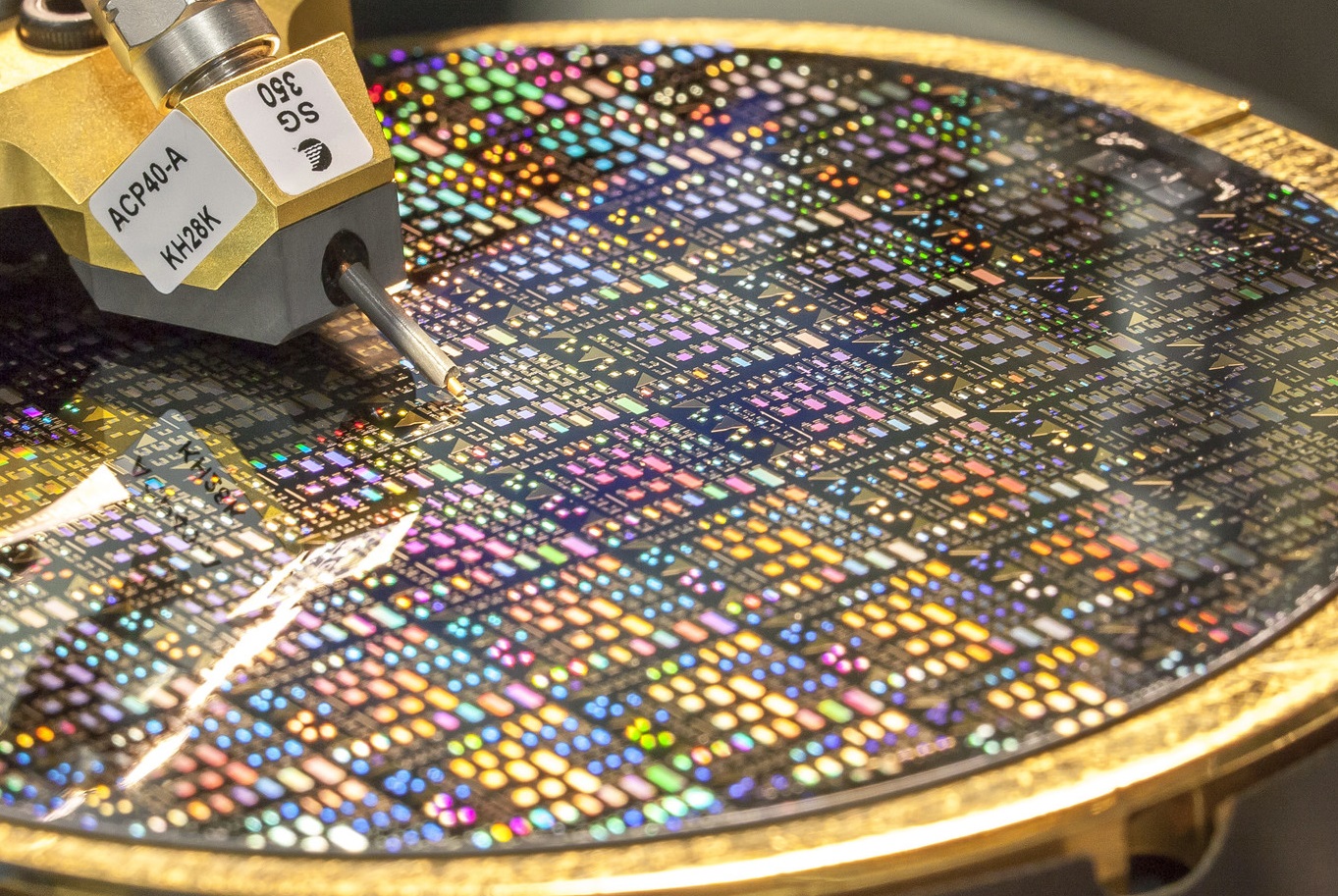
Europe’s need for semiconductors will nearly double by 2040 — to various degrees depending on the market segment and technology node, but the trend is clear (Source: ZVEI Study 2026: Europe’s Semicon Business Case – A Demand-Driven Perspective for a Competitive and Resilient Microelectronics Ecosystem). Consequently, Europe does not have a demand problem. Rather, efforts to translate this demand into industrial value creation have so far been insufficient and too slow. Political strategies alone are not enough to secure a leading technological position. The crucial question is therefore: What do Europe and Germany need to remain competitive in the long term and play a decisive role in shaping the future of microelectronics? Where do future opportunities lie?
Advanced packaging, heterogeneous integration and chiplets, System-Technology Co-Optimization (STCO), and the broad field of trusted electronics: all of these areas will be of great strategic importance in the future and offer business models for Europe. The reason: In today’s increasingly complex microelectronics landscape, it is becoming ever more important to consider the entire value chain in order to enable significant advancements. Chip design and advanced packaging, in particular, are areas where Europe and Germany aim to strengthen their presence and from which competitive advantages can be generated.
To systematically tap into this potential, important steps have already been taken with the first EU Chips Act. In addition, the High-Tech Agenda for Germany (HTAD) and the Chips Act 2.0 are currently realigning industrial policy priorities for microelectronics and reimagining the field in an even broader context with a focus on competitiveness. For example, work is already in progress as part of the APECS pilot line to accelerate the development of advanced packaging and chiplet technologies in particular and scale them to market readiness.
In this article, we — along with various industry experts from politics, industry, and research — aim to highlight the technological solutions and application areas we should focus on in the future, the role pilot lines play in the success of current policy initiatives, and what is needed to fundamentally accelerate the transfer from research to industrial application. In particular, collaboration among key players from industry, research, and politics is a major factor for success in this regard.
"Chips Act 2.0 brings Europe together for our technological sovereignty, connecting lab to fab, supply to demand, and industry to public authorities", says Thomas Skordas, European Commission, DG CONNECT Deputy Director-General.
With policy decisions like this one, a crucial phase is now beginning: the development of technological capabilities that will ensure Europe’s long-term competitiveness. This is no longer just about manufacturing capacity. What will be decisive is in which technology fields Europe develops its own strengths in the future.
Which technologies will determine Europe’s competitiveness?
The coming years will be shaped not only by new semiconductor technologies, but above all by their applications. Artificial intelligence, safety-critical systems, and the digitization of healthcare are fundamentally changing the demands placed on microelectronics.
"Over the next five years, the most consequential shifts for Europe will be the acceleration of artificial intelligence, particularly physical AI, the advancement of quantum computing, and the growing strategic importance of aerospace and defence technologies", affirms Manfred Horstmann, General Manager and Senior Vice President at GlobalFoundries Europe. "These developments will shape not only industrial competitiveness, but also Europe’s resilience, security and technological leadership."
Artificial Intelligence Is Transforming the Architecture of Modern Semiconductor Systems
With the rapid advancement of artificial intelligence, demands on computing power, energy efficiency, and system architectures are continuously increasing. Traditional scaling approaches are increasingly reaching their physical and economic limits. Instead of continuously optimizing individual chips, the focus is shifting toward integrating specialized components into high-performance systems.
As a result, chiplets, heterogeneous integration, and System Technology Co-Optimization (STCO) are gaining significant importance. They enable the flexible combination of different technologies, thereby facilitating the development of high-performance, energy-efficient AI systems.
FIRST by FMD is dedicating several sessions and panels to these developments — ranging from the impact of artificial intelligence on future microelectronics systems to advanced packaging and chiplets, and on to new STCO concepts.
“We’re at the dawn of AI — true impact requires breakthroughs in performance and ultra-efficient energy use in computing systems,” explains Hannes Voraberger, Vice President of Corporate R&D at AT&S, one of the speakers at FIRST.
AI is therefore not just a driver of applications but is redefining the technical requirements for future microelectronics systems.
Defense Needs Resilient European Supply Chains
As geopolitical uncertainties increase, the issue of technological sovereignty and security of supply is becoming particularly important.
For security-critical applications, it is no longer just performance that matters, but also the reliability of value chains and production capacities within Europe. Innovation ecosystems and industrial partnerships are thus becoming a central component of technological resilience.
This perspective will be explored in various formats as part of FIRST by FMD, including an opening panel on the resilience of European innovation ecosystems, a Strategic Spotlight on the intersection of microelectronics and security, and a discussion on the role of the semiconductor industry in 2035.
Industry Needs Faster Transfer from Research to Application
The economic impact of innovations only occurs when they can be translated into scalable industrial processes. This means that the transition from research to industrial implementation itself becomes a competitive factor.
“We need to turn our strong European semiconductor R&D into competitive manufacturing. Heterogeneous integration offers the highest ROI and innovation impact in this context,” emphasizes FIRST speaker Harald Gossner, Senior Principal Engineer at Intel.
Several conditions are crucial for this: access to development and design infrastructures — especially for start-ups and SMEs — the opportunity to pilot new technologies at an early stage, and the establishment of scalable innovation environments.
Within the framework of FIRST, these challenges will be addressed through sessions focusing on the transfer of research into industrial applications, access to design and packaging infrastructures, and the strategic role of European design initiatives in the semiconductor ecosystem. Patricie Merkert, Director of the Fraunhofer IAF and a speaker at FIRST, explains in advance:
“A truly powerful innovation ecosystem emerges when the strongest players in each domain build strategic alliances, combining their strengths to create the highest level of excellence.”
Technological Resilience for Europe
“Focused EU collaboration between academia, applied research, corporations, and SMEs drives game-changing innovation, giving us a European competitive edge,” emphasizes FIRST speaker Christian Frank, Managing Director of Sikora, regarding the importance of collaboration in the context of ensuring technological resilience.
European pilot lines such as APECS, which served as the basis for launching FIRST, address this very issue. They create the structural conditions needed to move new technologies more quickly from development to application and to systematically expand industrial scalability in Europe.
A key driver in this context is advanced packaging. FIRST speaker Rolf Aschenbrenner, Deputy Director at Fraunhofer IZM, explains: “Advanced packaging is strategic for Europe because it is key to semiconductor competitiveness, supply-chain resilience, and building local capacity for next-generation chips.”
FIRST as a Decision-Makers’ Forum
The developments described above show that Europe’s future in semiconductors will not be determined by individual technologies, but rather by the interplay of politics, industry, and research.
This is precisely where FIRST by FMD comes in.
The forum brings together key topics in European microelectronics development:
- Semiconductor Policy & Sovereignty
- Chiplets and Advanced Packaging
- STCO and New System Architectures
- Design Infrastructure and Pilot Testing
Through panels, sessions, and deep dives, leading representatives from industry, research, and politics discuss the critical issues of the coming years.
After all, the next phase of the European semiconductor strategy will not be determined by political programs alone. What will be decisive is how consistently research, industry, and politics translate technological innovations into industrial value creation. As Manfred Horstmann, General Manager and Senior Vice President at GlobalFoundries, emphasizes: “Europe’s future in microelectronics will be decided by joint efforts of industry and scientific organizations to rapidly translate research excellence into scalable industrial technologies.”
FIRST by FMD therefore does not see itself as a traditional technical conference, but rather as a European forum for decision-makers. It brings together stakeholders from industry, research, and politics to prioritize technological priorities, discuss industrial policy developments, and develop shared perspectives for the next phase of European microelectronics.
FIRST by FMD
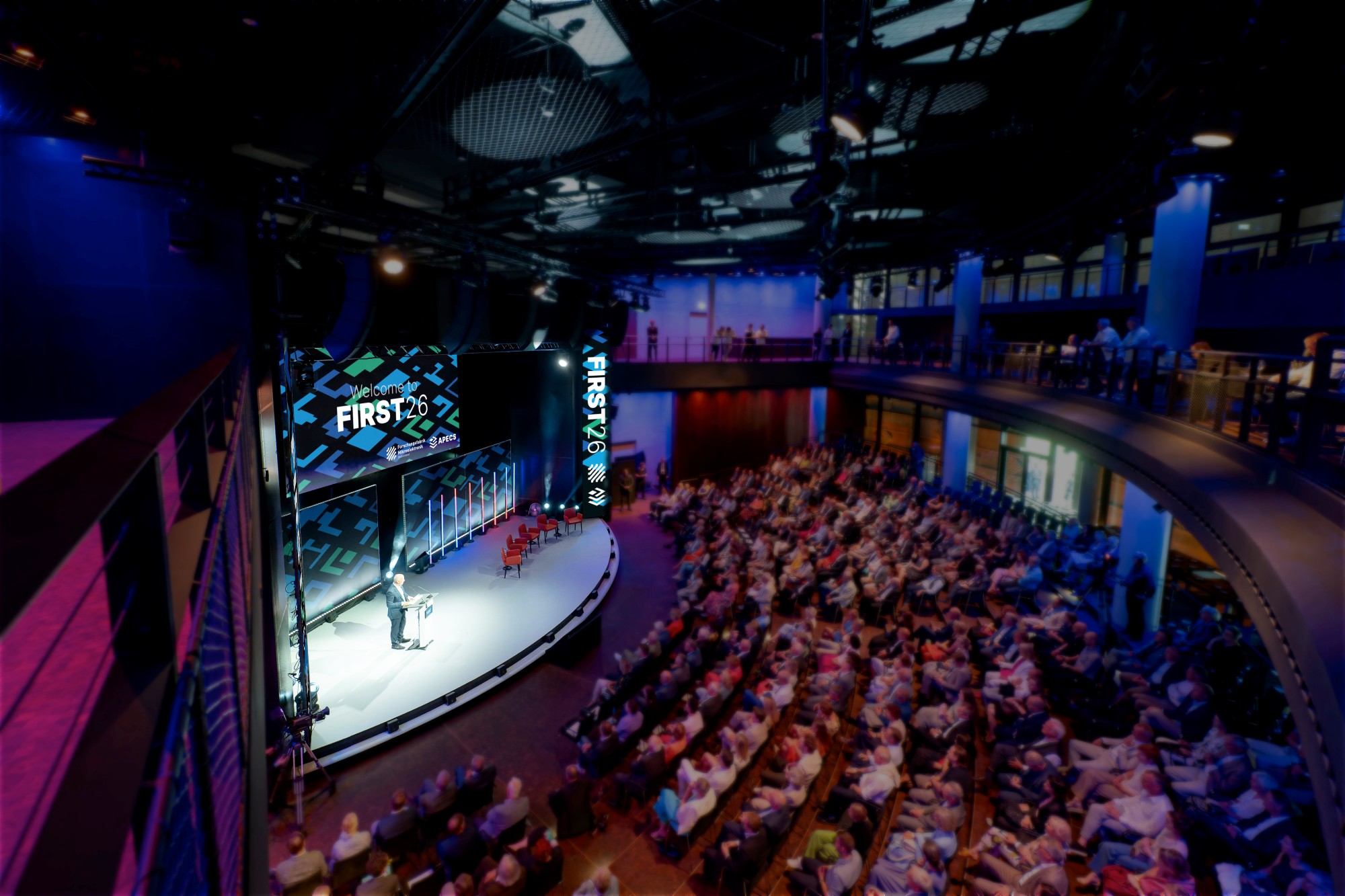
FIRST by FMD (Fast Innovation through Research in Semiconductor Technologies) is a forum for decision-makers and trendsetters in the semiconductor industry. Initiated by the Research Fab Microelectronics Germany (FMD), the two-day conference at the EUREF Campus in Berlin brings together leading figures from industry, research, and politics. The focus is on how technological roadmaps can be transferred more quickly from the laboratory to industrial practice. The high-level forum serves as a central platform for executives and strategists to forge partnerships, strengthen supply chains, and actively help shape Europe’s technological sovereignty.
Last modified: